
Between Ethics and Drama
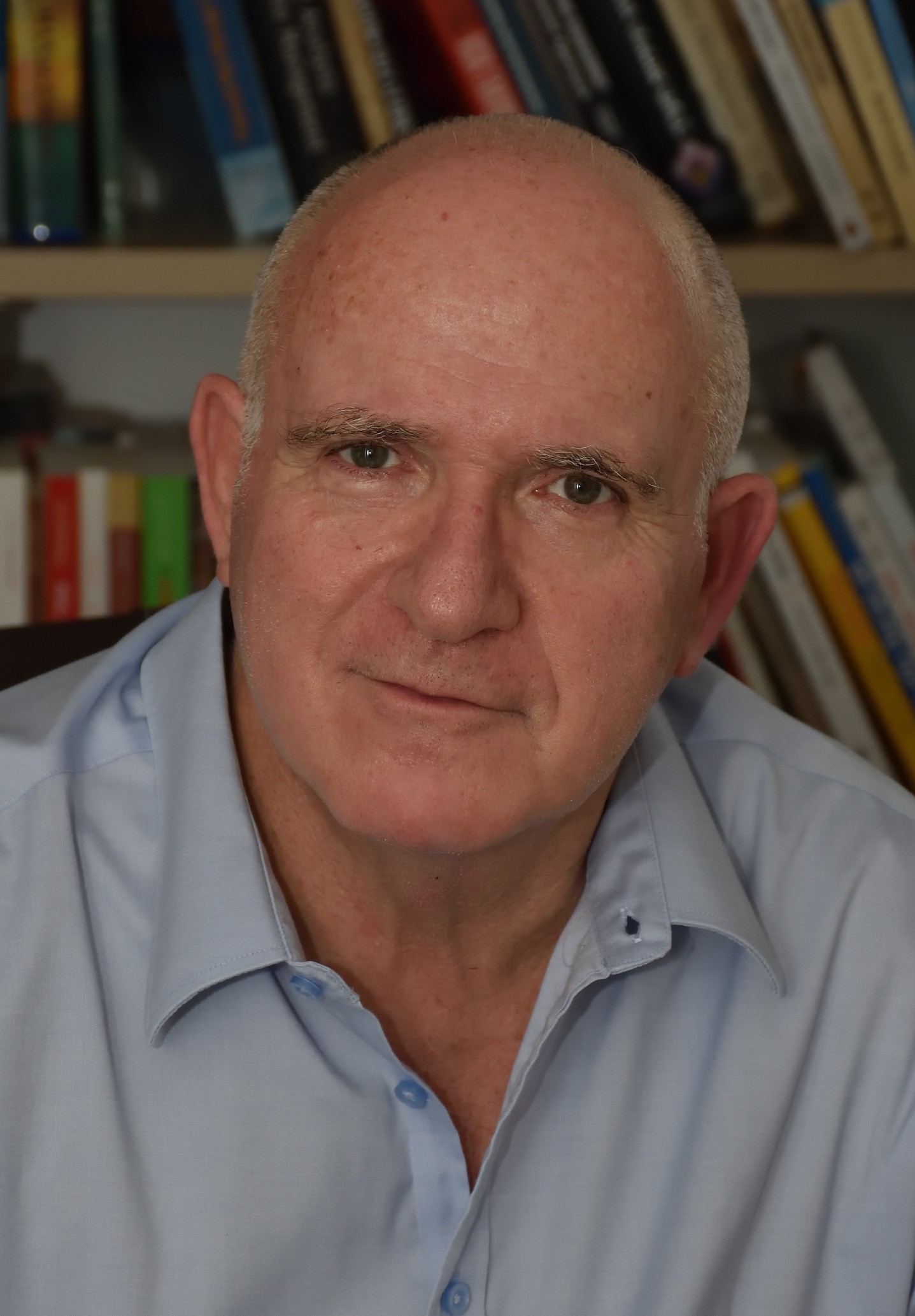
By Dr. Eldad Shidlovsky* :
Yossi Yzraeli’s starting point is the study of theatrical experience, whereas Emmanuel Levinas’s starting point is philosophy and ethics. Despite the differences between them in almost every possible biographical parameter, I was surprised to find lines of similarity and points of contact in the thought of Levinas and Yzraeli
Yossi Yzraeli is a director, playwright, poet and professor emeritus in the Theater Department at Tel Aviv University. The first production that Yzraeli directed in Israel in 1965 was “Utz Li Gutz Li” (Rumpelstiltskin), and since then he has directed some 80 productions, some of which deal with Jewish themes, including theatrical adaptations of tales and teachings by Nachman of Breslov, Agnon, Kafka and, more recently, the books of Job, the Kuzari and “Minor Prophets.” The theater is the medium through which he asks the big questions.

Emmanuel Levinas (1906–1995) was a Lithuanian-born Jewish-French philosopher, one of the central figures in twentieth‑century philosophical and Jewish thought. He formulated a revolutionary conception of ethics as the starting point of philosophy and devoted a large part of his work to rereading rabbinic sources through “Talmudic readings” that sought to translate the inner workings of the Jewish tradition into a modern philosophical language.

Yzraeli’s Theatrical Conception
According to Yzraeli, theater deals first and foremost with the experience of time, the fear of its finitude and its possible meaninglessness. Theatrical time creates for the spectator an autonomous present in which the spectator is freed from the perishability of time and grants it meaning. “Worthy theater” aspires to present a whole world within a limited space and a short time span – a small container that contains the infinite in the very act of becoming. He calls this time “a compressed autonomous present.” It is quality time, a taste of eternity, “a sort of world to come,” redemption.
Opposed to the compressed autonomous present being formed in the Western theater's conception of time, the Jewish theater's conception of time is presented – a time that is an endless progression from a hidden Genesis to an inconceivable end of days. The conflict in Jewish drama takes place between the patience of longing and the impatience of “redemption now.” The catharsis in Jewish drama is not an ending; it is a kind of continuation of a new beginning and of longings intensified many times over – and so on to infinity. Within the tension between these two conceptions of time, between Athens and Jerusalem, Yossi Yzraeli’s theatre is created.

Yzraeli developed a unique approach to directing that is based on analyzing the structure of the play. In his view, the key to directing a classic play is not in the answer to the question “What is the play about?” but in “How is it constructed?” An analysis of the play’s structure includes understanding the tension between the structure of the spoken line and the dramatic action compressed into it, as in a Procrustean bed. Yzraeli calls the location of the action in the written line, or many lines later, “the scorpion’s dance.” The spoken text in worthy drama is always several sizes smaller than the action compressed within it. In Yzraeli’s conception, a worthy drama does not “begin” but “bursts” into the middle of the plot, and sometimes into its end. The director is supposed to analyze the menu of actions and the point of their eruption in the written text. The later in the text the action is found, the higher the dramatic yield.
Another concept in his system is “mutual becoming” (becoming through mutual action), in which every dramatic action functions as a response to the dramatic action of another character. A character exists only within the dynamics of mutual becoming with the other characters, and likewise each character with the spectator. Yzraeli is opposed to using a “character sheet” that pre‑summarizes the traits, characteristics and psychology of a character. For Yzraeli, a character is the sum total of its unexpected actions. In Yzraeli’s rehearsal room, three words are never to be mentioned – “character,” “situation,” “relationship.” In his view, these three concepts are not a starting point for the actor’s work, but a result. Yzraeli explains his creative method as a parting from the familiar and known and a journey into the mystery that lies beyond, into its infinity. Without mystery there is no theater.

The theater offers a human synagogue, a secular religion in which human beings give themselves to one another with their full presence. In his Jewish perspective on drama Yzraeli argues that if action is an expression of will, and will is an expression of lack, then dramatic action can be understood as a “tikkun” (repair) in the Jewish sense, equivalent to fulfilling a religious commandment between one person and another, and even beyond that.
Levinasian Ethics and Theatrical Ethics
Ethics, according to Emmanuel Levinas, is expressed in my encounter with the Other and in making room for the Other. This is a dramatic encounter and an ethical drama. The source of Levinasian drama is the fact that we are separate and other. The Other places a mirror before me, confronting my opinions, my feelings and my sensations. The Other constitutes a threat, imposes obligations on me and demands that I take him into account. Placing trust in the Other necessarily involves taking risks. The ethical act is not simple; it involves overcoming fear and risk. Levinas calls this “the good risk.” The encounter with the Other, who places before me a mirror that reveals my weaknesses, is often not easy. The defense mechanisms may be ignoring the Other, fitting him into our concepts, or assuming that the Other is similar to us. In extreme cases, the fear of the Other leads to suppression, enslavement and even killing of the Other. On the other hand, Levinas explains that despite the threat, the Other allows me to emerge from my closed world and develop. The Other is not only hell, as Sartre said; the Other also gives me a gift.
The ethics of theatre are tested in the encounter between othernesses – between the actors and the characters they embody, the encounter between those characters, and the encounter between them and the audience. According to Yzraeli, ethics in theatre lie in an experience whose essence is “to affirm humanity as a support group.” The approach to “other” characters is made by extracting them from the general human system, compressing them into the space and time frame of the theatrical event – the “compressed autonomous present” – and realizing them fully in mutual becoming.
Ethical and Non‑ethical Theater
Yzraeli distinguishes between ethical theatre and non‑ethical theatre. Similar to Levinas, he bases this distinction on the relation between othernesses. Any character as such is meaningless and exists only in mutual becoming with another character. In such an encounter, every action must be urgent, primary, revelatory‑transformative, and must illuminate in the other characters a new “I.” The dramatic action always occurs in the Other.
Parallel to the Levinasian claim that sees the non‑ethical encounter in ignoring the Other and his infinity, in the attempt to flatten the Other to the measures of the I and, in extreme cases, to remove him, Yzraeli claims that non‑ethical theatre stops at the stage of recognition and does not strive for the stage of revelation. The move to the stage of revelation in drama is the experiential process in which the Other reveals in me my human uniqueness in all its complexity, in its infinity – all that I did not know about myself or was not willing to know about myself, and likewise I in the Other. The transition from recognition to revelation is the ethical act. Levinas writes that “The I and the Other maintain relations while at the same time remaining absolute within these relations, while at the same time remaining completely separate.” The infinite closeness to the Other does not reduce the infinite distance from him.
In non‑ethical theatre, the spectator immediately recognizes the familiar and known in the character (which the actor copies from the spectator’s world or from what is “accepted” as such) and receives from the stage confirmation to suffice with his own self‑image that he is comfortable with. The encounter between the character and the spectator in non‑ethical theatre is mutual affirmation that you are perfectly fine as you see yourself, and thus non‑ethical theatre cushions the audience’s comfort and serves as a resonance chamber for the audience’s sigh of satisfaction when the status quo is preserved and the world goes on as usual. Non‑ethical theatre produces stereotypical characters and turns them into a familiar object doomed to be imprisoned in its stereotype. The character and the spectator trade in counterfeit currency that is legalized as legal tender. The action in non‑ethical theatre is not urgent but optional, and not primary but based on habits, on explanation that rests on knowledge and not on discovery. It desecrates the dramatic present by leaning on the past and not on the present‑in‑becoming, and therefore it is considered a dramatic poison.
According to Yzraeli, conversation is not dialogue, and at best it is raw material for dialogue. Dialogue is two pairs of clenched lips, with the silence being broken by the one whose urgency erupts first, when enough is enough, when every deadline has passed. The spectator in non‑ethical theatre enters the auditorium with his self‑identity and, instead of that identity being deepened, shaken and obligated, he leaves the auditorium smug, with confirmation from the stage of his identity and his worldview. The dramatic encounter in ethical drama disrupts the conspiracy of calm according to which “everything is fine.” A dramatic‑ethical encounter constitutes a disturbance of the familiar and known order between othernesses and between them and the world, and its reconstruction.

Yzraeli argues that theater in which the totalitarianism of the familiar and known, the “communicative” theater rules – the theater that censors the language of depth – is static theater whose characters have been photographed in a still life portrait. This is theater that does not feel ethical responsibility toward its audience. Instead of improving the quality of their lives in a journey into their complexity, such theater fixes the smugness of the familiar and known and corrupts its audience through processes of degeneration in self‑satisfaction. The bowing ritual in non‑ethical theatre is a festive mutual affirmation of a rigged game in which both character and spectator “are right in advance.” This is “safe” theatre, and therefore degenerating and degenerative – a strategic risk to the resilience of a nation’s spirit and its culture.
“Putting on a Face” According to Levinas and Theater Masks
Levinas writes that “first of all one should note the very innocence of the face, its open exposure, without protection. Of all the organs of the body, the skin of the face is the most naked and the poorest. It is the most naked, though its nakedness is decent, and also the poorest, for there is in the face a basic poverty, and the proof is that human beings try to cover this poverty with mannerisms and various forms of pretense.”
According to Yzraeli, drama is a dialectical process of removing masks. Thus characters come into being in mutual becoming. At their first encounter the characters don the mask of “pretense”: “I am such and such.” This is the stage of recognition. In the course of mutual becoming, new faces are revealed behind the mask of pretense – this is the stage of revelation (“seeing the face,” in Levinas’s terminology). Thus the ethical event begins.
Removing the masks frees each character from what is familiar and known to it “in life.” Removing the masks as mutual becoming also takes place between the actor and the spectator. This is the meaning of the theatrical event. The spectator gives the character his trust, curiosity and willingness to take a risk, and the character gives the spectator a mirror to his infinite internal world. The spectator’s identification with the character begins with the mutual removal of masks – his and the character’s. Catharsis is the final stage of mutual revelation. Catharsis appeases the anxiety of death and grants a taste of eternity, when the mutual responsibility for the infinite existence of the humanity of actor and spectator is realized.
This experience of humanity as a support group is the essence of ethical theatre. The ritual of applause and bowing, in which the actor whose character has “died” returns from the dead to meet the spectator who thanks him for the journey of acquaintance with himself – this is the ultimate encounter between two othernesses, the celebration of redemption.

*From Dr. Eldad Shidlovsky’s book "Conversations About Levinas with Rabbi Daniel Epstein, and Other Essays" published by Rubin Mass Ltd..


Comments