
What is Documentary Theater, and How Do They Do it?

They came to documentary theater from all sorts of backgrounds: out of an artistic search , out of a social struggle, out of a therapeutic process, as part of investigative, academic, historical, psychological, or legal research, and they have different approaches and different understandings of the concept of “documentary theater,” but in the end, they all aim to use the raw materials of reality to create a live encounter between an audience and a human story.
Eight creators in a multifaceted dialogue that addresses dilemmas, challenges, and vastly different approaches to documentary theater production.

What exactly is documentary theater? How would you define it?
Roee Joseph: In my view, a definition is meant to serve as an interpretive key for the work.
A key that will serve, first and foremost, the viewer, but also the other participants in the field—creators, critics, researchers, etc.
I suggest viewing the definition as a subsequent addendum to the artistic work, because the work precedes the definition, and in this sense, the definition does not dictate the mode of operation, but rather retrospectively comments on it .
For me, a definition is effective if it helps me better understand the work.
At a fundamental level, I would say that this is "Theater with Connection to Reality." Every form of theater has some connection to reality, but documentary theater has a unique approach in its reflexivity, in that its relationship to reality is deliberate, conscious, direct, and closer than that of any other work. One of the difficulties in coming up with a definition is what I call the “compartmentalized mindset,” according to which a work cannot fit into more than one box, and this mindset prevents us from recognizing that certain works are situated at the intersection of genres.
The second problem with this approach is that the definition becomes “all-encompassing,” one that must describe the work as a whole and determine whether it is documentary, and if I have to make that decision as a gatekeeper, I may overlook more nuanced complexities.

I propose not to think of documentary theater as a set genre with a fixed set of rules, but as a “possibility,” almost a “tool in the toolbox” of creators. In practical terms, this means thinking of the work as a sequence of events in time, where from this sequence I can point to a particular moment and show how at that moment the “tool” of documentary theater was used. This means that perhaps I can exit a work that I have watched and determine that it ranks low on the scale I proposed earlier, but still mark certain moments within it as moments of documentary theater.
Keren Cohen Israeli: In my view, documentary theater is based on a personal story, an event that actually occurred and inspired the work, and it portrays a phenomenon that happened in real life. I believe the use of documentary techniques is only part of the work, and cannot encompass it entirely.
This is where the fictional world comes in, designed to amplify or highlight aspects of the real story.
Ronnie Brodetsky: I am not at all committed to the official definition. Generally speaking, I try to use random documentary material to create a broader story about the society we live in.
The truth I touch upon is not specifically related to research, but rather to humanity. I try to create theater that is a celebration, that touches on the bigger picture of life, that is stylized, abundant, funny, and exciting—from material that is completely non-theatrical, found on the margins of society, in the gray and unseen areas.
Maya Buenos: At first glance, my definition of documentary theater is the same as the definition of theater itself: an artistic medium that allows us to reflect reality.
However, documentary theater does more than that.
It confronts reality, processes it, examines it, and attempts to influence it. In my view, the gap that exists in documentary theater between the documents themselves and their stage adaptation is the gap that underlies theater as a whole, and it lies between the sequence of events and the way we narrate them.
What does documentary theater offer that other documentary mediums do not?
Maya Buenos: We live in a changing world.
The definition of what constitutes truth is becoming increasingly blurred, and quite a few professions will soon disappear from the world.
My good friend Omri Marcus aptly described this transition: Some of us will no longer be creators, but rather curators, and our talents will be expressed in the way we guide and shape artificial intelligence. Theater, as the world's oldest art form of storytelling, which exists only through physical presence, will also survive this revolution.

In the face of a changing world, the exploration of current and historical events on stage will become even more significant. I, of course, will not be the first to compare theater to the world of law, but in my opinion, documentary theater, when it comes to examining a particular case, will become a public trial.
Motti Lerner: Documentary theater examines a political/social issue from a perspective that allows for an exploration of the internal processes of characters who acted within the framework of real-world events. Filmed and recorded media cannot reach these deeper layers, as these processes are not visible and cannot be documented. The exploration of these internal processes is carried out using the dramatic tools at the playwright's disposal, who examines these processes through his or her dramatic imagination, rather than through documents, interviews, or any form of documentation. The discovery of these processes allows us to reveal events that are familiar to us at a depth that is completely unknown to us.
Ilya Domanov: In my view, documentary theater as an art form can offer the audience a complete, total immersion into the material—into the texture of the play, into the situation itself, into the very reality that unfolded before the creator’s eyes. It is an opportunity to experience, to bear witness, to become a participant in the events rather than observe from the sidelines, but to be present within the unfolding itself.
Ronnie Brodetsky: The documentary stage can tell a third story—one that goes beyond documentation. Because documentary material is represented by performers—the actors—even a change of setting, costume, the thoughtful addition of music, or a particular staging choice can transform a minute detail into a profound truth. The stage can highlight the story beneath the words, the hidden relationships, and shape an additional narrative. The stage is an opportunity for celebration.
What is the advantage of documentary theater over theater based on complete fiction?
Roee Joseph: The first advantage is in the kind of emotion that arises from the experience of watching documentary theater. I think it creates an additional emotional dimension that I'm finding difficult to name. A sort of vibration or tension that is related to the fact that I, as a spectator, know this is real, and these, in turn, create an effect intensifying emotions that arise as I watch. Meaning, when something makes me laugh, this will make me laugh harder, because it really happened. When something makes me sad, this will make me sadder, because this really happened. When something is unfathomable to me, this will make it more so, because this really happened. This knowing, that the things presented before me have affected real people, is powerful. The second advantage is related to the fact that documentary theater, when done well, is able to offer new, different, unexpected, subtle and complex dramatic structures, but ones that can also inspire empathy and understanding, because they originate in the social and mental action that exists "in real life " These structures arise from a wealth of details and nuances. Reality is made up of details. If I were to try to generalize, then I would say that documentary theater flows from the details to the structure, and fictional theater tends to flow from the structure to the details.
Danielle Cohen Levy: I love true stories. In fact, several of my works quite literally begin with the words, “Everything you are about to see on stage really happened,” or “Everything I’m telling you is completely true.” Reality moves me, sweeps me away, unsettles me, brings me to tears, and sparks immense curiosity in me. The very fact that things happened one way or another is a powerful engine for my creative work. Reality is a reservoir of questions without clear answers, and then the act of creation itself becomes a question: Why did this happen? What was the motivation? What is the meaning? Is it possible to find order? And so, the detective within me sets out on a journey, searching for order, meaning, or logic.
Keren Cohen Israeli: In a fictional production, the audience’s experience is measured more in relation to its artistic qualities, but it tends to be less significant on an emotional and cognitive level. After watching a play that isn’t anchored in the realm of real life, it’s much easier to “move on.” By contrast, the audience’s capacity to identify with a narrative that actually occurred is greater, and the work itself may carry deeper meaning. The proximity to reality allows viewers to lower their “cynicism” or detached, “dry” critique, to broaden their perspective on the subject at hand, to open their hearts—and also to touch their own “wound.”
Maya Buenos: There are stories that must meet an audience, injustices that must be exposed and brought to light and specifically on a theater stage. There are stories I would have very much preferred not to tell, but my responsibility toward the subjects of those stories was stronger than that. Perhaps the advantage lies precisely in this point—in illuminating the story, in understanding that the very act of bringing it to the stage can alter the course of reality.

Motti Lerner: Documentary theater typically seeks to present an unfamiliar narrative of a historical, political, or social case—one that often differs in essence from the established, institutional narrative. Its primary advantage lies in its engagement with issues of historical, political, and social significance, thereby taking part in shaping the audience’s political and social identity.
Ilya Domanov: Documentary theatre is more precise and more immediate, more powerful in its impact, uncompromising and direct. It responds to real events—ones that are sometimes hard to believe and impossible to imagine. Even before an event can be artistically processed, documentary theater has already begun. We are all familiar with Konstantin Stanislavski’s “magic formula”—the “if.” In documentary theater, that “if” ceases to be “magic” and becomes reality, creating an entirely unique point of contact with the audience. And therein lies the power of documentary theater- in the ability to erase the boundaries between the spectators and the protagonists of the play.
Ronnie Brodetsky: I deeply appreciate complete fiction, but there’s no doubt that the power of documentary lies in its renewal of theatrical form, and in the simple fact that it deals with truth—that this is what our real lives look like. Documentary theater allows the audience to re-examine their own lives immediately, whereas fiction, by its very definition, remains more distant.
Ori Egoz: In my play “In the Name of the Children,” which is based on a true event that took place in the Łódź Ghetto in 1942, when the head of the Judenrat was forced to hand over children up to the age of 10 and adults over 65 to the Germans, in exchange for the apparent “salvation” of the ghetto, I felt, during the complex period following October 7, the tension of the audience watching a reading of the play at the recent “Center Stage” festival. I could sense how they realized that this story had truly happened, and how it reverberated within our present-day experience. Ferdinand von Schirach, a successful defense attorney and author, unfolds in his play "Terror," the fictional trial of a German air force pilot who chose to shoot down a hijacked plane and its 164 passengers, against orders, because it was on its way to crash into a crowded stadium. Later, the audience is asked to decide whether the pilot was right or wrong, but the audience knows that this is a theoretical situation that was taken to the extreme for the needs of the story. Incidentally, this same von Schirach is the grandson of the head of the Hitler Youth, and perhaps that is why he preferred to invent such a dilemma, rather than directly confronting a real and cruel issue like the one the Nazis posed to the head of the Judenrat in Lodz.
What do you think about the claim that even a documentary work is actually a work of fiction, and that the stated basis on real events and documents is a manipulative artistic device that may mislead those who regard the work as a reliable documentation of a real event?
Motti Lerner: Documentary theatre is, for the most part, a fictional creation, mainly because it deals with the inner worlds of its characters—worlds for which there is no documentation. In my view, documentary theater can reveal a deeper truth than historical truth itself, a truth that the historian cannot reach through the tools of historical research.

Ori Egoz:
There is, in my view, an unspoken pact between you and the audience when you write about a subject that is explicitly stated to be inspired by true events. Within this pact, you are trusted, the audience extends a hand to you, and they walk with you along the paths of history. It is a trust that must be respected. When working on a creation based on a historical event, you as a creator sometimes use your imagination to complete details you could not find in your research, or (and this, in my view, is problematic) omit details. I am currently working on a book and a play about Miklós Krausz, one of the greatest rescuers of Jews in Hungary. Unlike the story of Rudolf Kasztner, Krausz’s story is almost entirely unknown because in the play “Kasztner” which reignited the debate surrounding the deportation of Hungarian Jews to Auschwitz, my esteemed playwright and lecturer, Motti Lerner, did not include the figure of Krausz, who was Kasztner’s main defense witness.
While Kasztner organized a train carrying 1,684 survivors, his colleague in the Rescue Committee, Miklós Krausz, believed he was wrong to cooperate with the Nazis, and together with others worked to forge more than 40,000 exit permits from Hungary. Every Jew who received one of these documents was granted protection from deportation to Auschwitz. In another context, the question was raised in court about the limits of creative freedom, and it was determined that the boundary is wide. My master’s thesis focused on “The boundaries between fiction and truth and the creator’s responsibility.” There is a spectrum of opinions, ranging from total commitment to strict adherence to events, to a position that allows creative freedom even at the cost of constructing an inaccurate picture.
As for myself, I believe that if you knowingly omit something you are aware could distort historical truth, you are abusing the trust the audience places in you.
Ronnie Brodetsky: I have very serious doubts about the word “truth.” After all, even a person telling a story that truly happened to them is not speaking the truth in any absolute sense. They have a certain perspective from which they tell the story; there are things they choose not to tell; there are things that happened in reality that were hidden from their awareness; there are words they choose to use to describe the story and words they choose not to use. There are particular emphases in their telling that highlight certain elements, and it could have been otherwise, emphasizing other things.

Every story is, in a sense, false—and that is wonderful. The ambition is to identify a deeper truth that exists within humanity, and to tell it through details.
The second half of the question feels like a criticism of this action - I'm obviously not a party to it. Facts are a very marginal part of art and life for me, and in general, facts and common sense are overrated.
Keren Cohen Israeli: As a playwright whose main body of work focuses on personal stories and human crises grounded in reality, I tend to write imagined situations into which I weave elements drawn from real life: emotions that arose, the authentic language of the characters, the merging of several real-life situations into a single scene, and at times even entirely fictional scenes that could very well have happened to the characters in reality as well.
Through imagination, I am able to move more freely into other realms, without overthinking whether I am “hurting” or “exposing” someone against their will, against their readiness, or their emotional state. Through imagination, I manage to come closer to a painful, unsettling, and stirring truth—without the obligation or expectation that I adhere to factual accuracy.
How would you define truth? What is its role in documentary theater, and how important is it to you? How do you deal with the tension between factual truth and theatrical truth?
Motti Lerner: Theatrical truth is a fact presented on stage and justified through theatrical means, in contrast to historical truth, which is justified through the tools of historical research. The ethical principle I follow in my writing is that theatrical truth cannot contradict historical truth—for example, in the play “The Eichmann Trial,” I cannot end it with Eichmann being acquitted. However, I can construct for the character internal processes based on an exploration of the figure using dramatic tools that were not available to the prosecutor in the historical trial.

Ilya Domanov: Truth in documentary theater is undoubtedly important; it is one of its central criteria, but this truth is neither a slogan nor a verdict.
Ori Egoz: I try to deepen my research as much as possible, even though I know there will be entire areas relating to the characters’ behavior and motivations that will not appear in the research material.
While working on the play “In the Name of the Children,” I was sitting one day in a café with my screen open on the profile of a child from the Łódź Ghetto, a boy named Abraham (Abramek) Koplowicz. Suddenly, an elderly couple sitting near me approached and asked how I knew him. I explained that I didn’t know him, but that I was working on a play about him and told them what it was about.
And what are the chances? Turns out they knew the stepbrother of that very boy who had been murdered. I traveled to meet him—he was then 90 years old, the late Lolek Greenfeld. I told him about the play, and I discovered that he had been the teenager who sat next to the door of the head of the Judenrat, whose role was to open and close the door for the Germans. He knew the characters well, and meeting him—an encounter that gave me new insights about them—felt like a miracle, like some kind of sign saying: you are on the right path, and here they are sending you messengers
Keren Cohen Israeli: Truth is the foundation from which I begin my writing, but truth is also subjective and open to interpretation. Facts, in my view, belong to other domains. They can be part of the matter, but I must let go of what exactly happened in reality in order to convey to the audience the messages I consider important, and to reveal emotional truth—through, and even thanks to, theatrical fiction.

What ethics do you strive for as a documentary theater creator? How important are fidelity to sources and factual accuracy to you in the documentary creation process, and in the result?
Ronnie Brodetsky: They are not important to me at all. My ethics are based on the idea that the story is what matters. To tell a story, to observe human beings, to be moved by them, to be amazed, to feel compassion, to love—these are the things that matter to me in the creative process. What actually happened? That is of interest to the police.
Roee Joseph: That's a good question, because it keeps coming up in discussions with other professionals. I often hear things like "The fact it happened in reality is not good enough reason for it to be presented on stage". This usually comes in response to the demand to change something for the good of the piece at the cost of changing some of the real-life details. The playwright needs to be dramatic, and therefore he cannot justify a choice with the reasoning: "Because that's how it is." This is not only an ethical question, but an aesthetic one as well. My perception is that reality is the basis, it precedes creation. It is first and foremost. It is not a tool for me. I oppose the perception that sees reality as a "resource" for creation, a source of stories and plots. I do not arrive with a predetermined meaning and seek to arrange what will be taken from reality, and serve the template with which I arrive. My role, for me, is to extract the hidden dramatic structure that already exists within reality. From this point of view, I do not want to cancel, erase, distort, change or replace the details. In an ethical sense, this is also my contract with the audience. What I show here is real. And if it is not real, if it exceeds reality, then I will confess it within the work. I agree that dramatic reasoning is needed, and that "that's how it was" cannot be the only reasoning, but I always counter it with the reasoning "but it wasn't like that in reality.", as a counter-argument.
Ori Egoz: Following October 7th, I was approached to write for an initiative called “War of Heroes,” intended for children. My perspective as a writer sought a way to mediate this trauma for children, but here fidelity to reality, in my view, was critical—and that very fidelity ultimately prevented the piece from coming to be, because it was simply too difficult.
When I received an offer from the Cameri Theatre to direct the play “From Crystal to Smoke,” written by Jacques Attali and based on the meeting minutes of Nazi leadership from a meeting held in 1938 in Berlin following Kristallnacht, I searched extensively through archives in order to create a more fluid and dramatic adaptation that would remain faithful to the original, and I was very meticulous about the quotations.

On the other hand, in the musical I'm writing now, about the story of the musical trio Chocolate, Menta, Mastik, I allowed myself a lot of creative freedom. For example, I looked for support for the fact that the group's breakup was difficult and created a disconnect, and I also talked to them about it, but I allowed myself to concoct a more extreme, more comedic situation.
Keren Cohen Israeli: My ethics are first and foremost toward the people I write about, or whose voices I bring to the stage. It is important to me to remain as faithful as possible to the sources, both for their sake and for the sake of the audience—especially on an emotional level. I would never write about something that a person is not able to cope with being exposed, or that would not serve them in any way. For me, it is the paramount to see documentary creation as a golden opportunity, as a platform for development for the subject I am writing about.
At the same time, I am not interested in strict factual precision. Theatre does not function like a legal system; it has its own rules. Trying to adhere to exact details can harm the drama. What matters to me is to create a work inspired by a true story, one that represents the stories and truths of many people, including those who don't necessarily take part in the process, to represent the story of a community, a society, a people, or a gender.
For “factual truth,” there is no need to come to the theatre. One can sit at home with air conditioning and a cup of tea or a drink and watch it on a screen, or read about it in the newspaper.
What characterizes your documentary creation process, and what is the place of research in the process?
Maya Buenos: Research is the foundation of the entire creative process; it is the raw material, and it always contains the answer to the question of why this story needs to meet an audience.
Motti Lerner: When I write about a historical case, I make an enormous effort to research it to the best of my ability to allow myself to decipher it in depth, and so that the informed viewer—and fortunately, there are still such people—will not be able to easily refute the processes I depict in the play.
Danielle Cohen Levy: I love knowing everything, but also not knowing. In the places where I don’t know, my imagination begins to roam freely. I like building stories that are bridges between what I know and what has no answer. In a sequence of short monologues about Marie Antoinette, I enjoyed reading about her life and the historical period, but in the end, the words I gave her are a mixture of what I know, what I imagine, and my own private thoughts. It is no longer Marie Antoinette herself, but rather my perspective on the moment.
In the work “Can You Beat the KGB?” we trace the life and death of Alexei Navalny. Some of the texts in the piece are direct quotations from interviews with him, posts he published, or video excerpts. In that sense, I am committed to the story, but at the same time there is always, for me, a dimension in the work that is my personal meeting point with the material. This is a part where I am not bound to “truth,” but to the story I want to tell and my point of view on it.

Sometimes, in order to write, I give up the truth at a certain point (which is always limited), and that's when a new truth sometimes reveals itself to me.
Ori Egoz: For me, research carries a great deal of weight. Even when I write a fictional play, such as “My Zakopane,” which was staged at Habima Theater, I conduct extensive research in order to understand the period, the world, and the language. I try to integrate into the work that sense of the era I want to take the audience into, and even the musical world that accompanies the play.
Keren Cohen Israeli: My documentary creative process is characterized by in-depth research, both in a group forum and individually with the people I write about. The group research process includes acting and writing workshops through which I help them, in a sense, “befriend” the greatest trauma of their lives, or the significant crisis they experienced, enter their personal world through the “back door” and touch the heart of the matter. This process allows them—and of course me—to ask questions, search for answers, form positions, change opinions, and see alternatives they could have taken in life in order to resolve the conflict in question. The very act of research becomes part of a process of personal and collective healing.
Additionally, within the group process I look for what is different between the participants as well as what is similar, and I begin to construct a “group profile”—what is the voice that wants to be heard from this specific group, why now, and why this subject. Alongside this, there is the theme that interests me personally, and thus I create a kind of diverse texture of perspectives in order to tell one personal story that becomes universal and expansive.
Alongside the group research, I conduct personal research, in which I can delve deeper into questions, allow intimacy, a protected and safe space, and of course confidentiality. This enables boldness—to expose, to understand, to share, and to come into the light, literally and figuratively.
Ronnie Brodetsky: I create in a group. I like asking questions in the space, and the actors—the creative partners—are part of the process of collecting materials. I try to delay the moment I begin constructing a dramatic progression as much as possible. I restrain my urge to direct and to give form. I try to remain in a state of not-knowing for as long as possible, because that is where the treasures are found.
Once I feel I already have enough I begin to assemble a complete structure. I sit alone with the material and create scenes out of it. When I feel I have found the full structure, I return to the actors, and then the process of creating the fictional space within the work begins.

What is your attitude towards the staged use of documents such as video projections, audio recordings, presentation of written document, etc.?
Ori Egoz: In the play “From Crystal to Smoke” as a director I insisted on precision in the design of the Nazi uniforms, and even the text pages that were circulated during the meeting were printed with Reich stamps, in colors adapted to the printing style of that time. However, I chose not to include video projections in the performance.
In the documentary film “Seeds of Destruction,” which was made about the play and the process of its creation, many filmed documentary segments from the period were incorporated into the film, and it was very powerful—it turned the stage and the film into one unique collage.

Keren Cohen Israeli: Video projections add interest as a visual stimulus and allow for an additional emotional connection, and audio recordings also help reinforce the credibility of the story, strengthen the theme, and add a sensory layer of stimulation. In documentary works, I primarily use the research material itself. The details are critical for the person I am writing about, and this is a dialogue I conduct with them throughout the entire writing process, until they internalize the difference between reality and its representation on stage, and come to terms with the gap between the two.
Ronnie Brodetsky: It varies from production to production. In “Aquarium,” for example, the voices of the elderly people I collected became the soundtrack of the work. In “1000 Tutorials” and “Typing...,” actors used existing texts—YouTube videos and WhatsApp conversations—and performed them, so the documents themselves were not presented on stage. However, when the performances were staged, I came to understand that the audience wanted this, and very much needed it. In “1000 Tutorials", I projected some of the YouTube videos I had used in the play at the end of the show. In “Typing...,” in the pre-show announcement to the audience to turn off their phones, I emphasize that these are real WhatsApp conversations. It turns out that the proof that this is documentary material is important and adds additional value to the work.
How can documentary theater reflect competing narratives or conflicting versions of the same event? Do you strive for objectivity in relation to events, or do you adopt a clear point of view?
Ilya Domanov:A documentary performance is an artistic work. Its role is not to take anyone’s side—to neither adopt the position of the accuser nor that of the defendant. Its role is to share the possibility of seeing a situation from different angles, and to give the audience the right to decide for themselves how to assess what is unfolding. But here, truth is neither a slogan nor a verdict. Even a document—video, recording, testimony—can become a tool in someone’s hands: manipulative, selective, subjective.
And then the question arises: what can we trust?
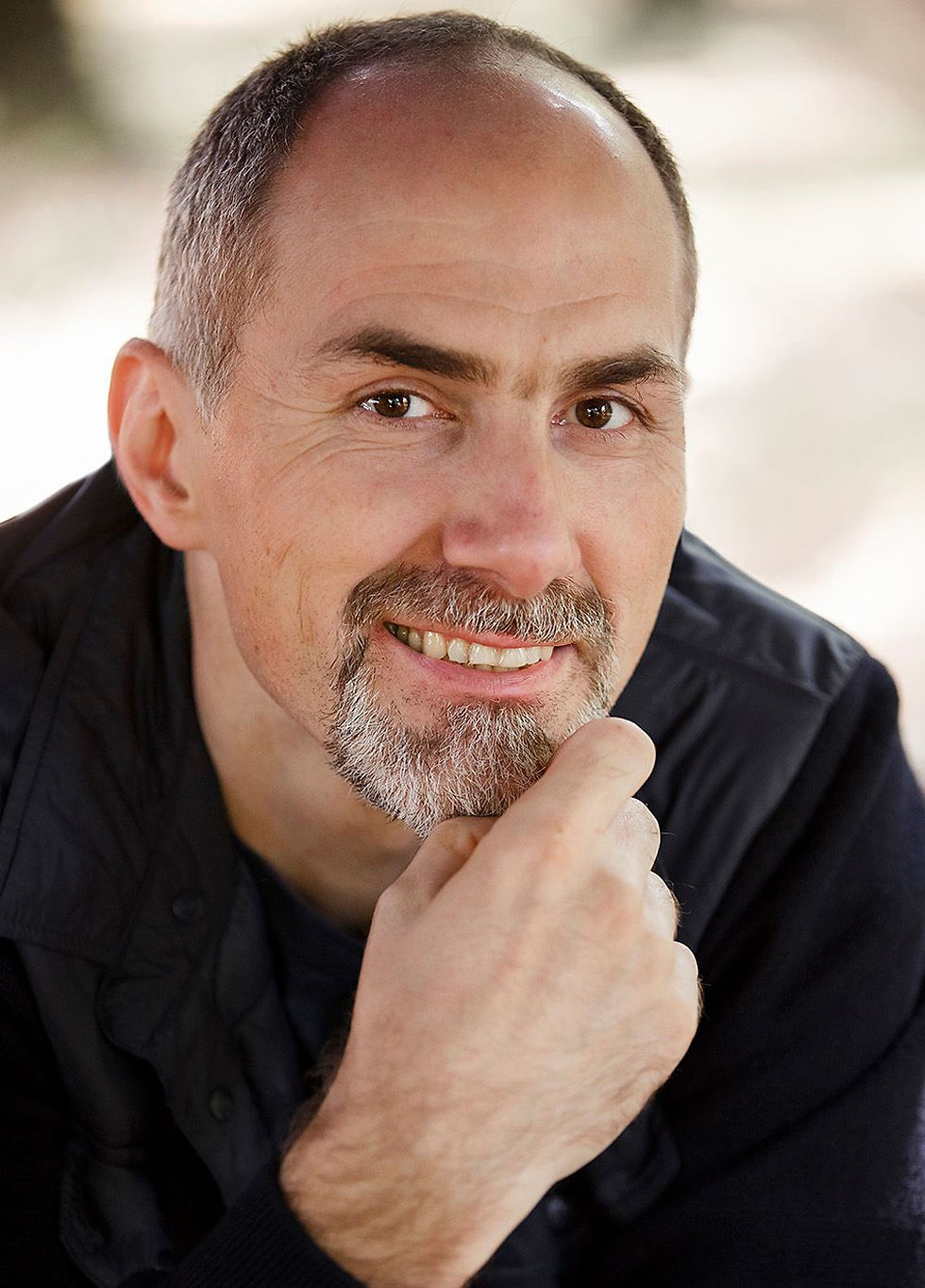
It is precisely here that documentary theater reveals its particular importance, because it is capable of telling both sides of the story, of showing that every event has at least two points of view.
Ronnie Brodetsky: I always try to find at least two perspectives for a scene, and never trust any character too much—even myself. I like complexity, I like contradictions, and I like characters who say things that are completely opposite to what I think. I like being able to love them rather than despise them. And in general, anything that distances us from an algorithm is, in my view, welcome.
Ori Egoz: Regarding the death of Mordechai Rumkowski in the play “In the Name of the Children,” there are several versions. I found a way to present all of them as possibilities. I thought this was the right approach so that the audience would be aware of them. Perhaps for me, all of this work I had been developing over a long time was indeed “in the name of the children”—that is, on behalf of those children. I wanted the audience to know and understand, and for this event not to be forgotten—even if there are multiple versions of the end of the head of the Judenrat.
The choice of perspective was important here because it prompts the audience to reflect on how they themselves might have acted in a similar situation. I wanted to allow for another point of view as well, and I incorporated it through the characters in the play.
Perhaps my background as a lawyer is important here in the commitment to the pursuit of truth, especially in the drama of life and death.
Did people who were involved in the real event on which the play you created was based watch the play? What did that evoke in you before, during, and after the play?
Ronnie Brodetzky: It has happened to me, and fortunately people were very moved by the opportunity to be represented. Although every time they come to watch, I am on the verge of fainting from the tension.
Ilya Domanov: People who had been part of the real events watched the play “My Red Nose,” which is based on my experience as a medical clown after October 7th, and it was a very powerful experience—for both them and us. They returned to those events and relived them together with us.
For us as artists, it offered the possibility of seeing the performance from another angle—from the perspective of a person watching the story of their own life unfold on stage. It became a form of therapy for the protagonists of the stories, for the actors, and also for the audience.

Ori Egoz: At the staged reading of the play “In the Name of the Children” at Beit Lessin Theater, the father of a dear neighbor of ours, Yehuda Vidavsky, who is 106 years old and was a teenager in the Łódź Ghetto, came to see the show. His daughter told me that he watched the entire hour and a half completely captivated, and that he was very alert and sharp.
It was an extraordinary experience, and also a feeling of a great responsibility resting on my shoulders—to depict this world accurately.
Motti Lerner: This has happened to me many times. Since I make an effort to avoid altering historical truth, those involved in the events or their family members find it difficult to take issue with me.
For example, in the play “The Tune Returns,” I attributed the fact that Nathan Alterman stopped writing major poetry at the end of the 1950s to the critical essay written about him by the poet Nathan Zach. It is difficult to dispute the claim that Alterman’s poetry declined at the end of the 1950s, and it is impossible to dispute the very existence of Zach’s devastating critical article. The connection between the two is a figment of my imagination—but it is justified through dramatic means.
Alterman’s family and many of his admirers did not like the way things were presented—but the very act of presenting them, in my view, created a fascinating discourse.
Danielle Cohen Levy: In my work “The Mysterious Disappearance of M,” I set out in search of a missing person I had never known. Most of the material consisted of conversations and recordings I made with strangers. Shortly before the premiere, I sent one of the protagonists the full text of the play. After several nerve-racking days, I received approval to stage the work, with a request to change just one sentence (which surprised me greatly). The person I had interviewed did not come to watch, but there was something meaningful in that as well.

The work “On the Way Home | Return Sign" is based on the autobiographical book by Yoram Eshet Alkalai about his injury and rehabilitation after the Yom Kippur War. This piece was, for me, in a certain sense a truly life-changing event, in the way I chose to approach creation and its relationship to reality.
The creative process lasted almost three years, during which I tried to understand how I could bring such an event to the stage. Yoram, in his generosity, gave me creative freedom to find my own interpretation within the adaptation from book to stage, and the dialogue between us accompanied the entire process.
The subtitle of the work is “An intimate event around the table about October '23 and October '73,” and it combines events from the Yom Kippur War together with events from October 2023. The audience and the creators sit together around the same table, read scenes from the play and excerpts from the book, and are also invited to share personal memories.
The first time Yoram and his wife Noga Eshet came to watch, we decided not to acknowledge their presence in the room until the end, and thus they were able, anonymously (in part), to participate and observe without being observed. For us (the performers), it was an extraordinary moment in which we shared with them a visible-invisible partnership. At the end of the event, Noga and Yoram introduced themselves, and the deep meaning of rehabilitation was expressed through this unique shared space around the table.
Roee Joseph: In all of my performances, people who were involved in the real events have come to watch, but this is not something that simply “happens.” The work is, from the outset, intended for them. The people from the reality I am creating about are my imagined audience, and they are also my most significant audience.
I think that the works that have moved me most as a viewer were those actually intended for one very specific person. It is a bit like children rehearsing in their room in order to perform something for their parents in the living room. A performance is meant for someone in particular; everyone else benefits almost incidentally.

In my own creative processes, this evokes the simplest thing: I imagine them while I am working in the rehearsal room, and then at the premiere I think mainly of them, and afterwards I arrive, frightened, to hear their response There were times when it was moving for the better, when it was joyful and close, and felt like a miracle, this thing of ours suddenly being presented for others to try to understand it. There were times when it was very difficult, when the person from the real experience felt great disappointment and sorrow. I will not elaborate on this further because it is important to me to maintain privacy.
Maya Buenos:
The encounter between the subject of the story and the character of the storyteller is a significant and moving one. But alongside them there are those who have experienced a similar event, and suddenly they too feel that they see themselves on stage—and that is no less moving.
In 2018, at the Akko Festival of Alternative Israeli Theater, I presented the work “May the Place Console You,” about the affair of the Yemenite, Eastern, and Balkan children. In it, I invited the audience to sit Shiva for people who, for their families, are still alive, thereby raising questions about their absent place in society.
At the end of the performance, just as the lights had gone down and before the audience had a chance to applaud, a shout was heard. From the stage I noticed an elderly woman in the audience. Her skin was dark, and gold bracelets adorned her wrist. She looked out of place in the Akko audience landscape; it was impossible not to notice her, and she shouted at the top of her lungs: “This is not a play, this is the truth.”
Three years later I presented another work, called “October,” which dealt with combat shock through the lens of the Yom Kippur War. If only I had known how its name would become repeatedly linked with trauma as the years went by.
At the end of the first performance, a couple and their son left the theater and stood by their car for an entire hour. The father suddenly began to tell his story, and it was the first time he had ever agreed to do so.
This is the power of documentary theater—the people on whom it is based, and the people it encounters.

Keren Cohen Israeli:
People who were involved in the real events have always watched the performance, and have even taken part in it on stage. The relationship with them is continuous, and therefore trust is built naturally. We experience something very connective together from the initial research process and the gathering of materials; they are present in rehearsals, and by the time the performance is staged, we have already travelled a long path together. This allows both them and me to breathe as they watch it come to be, alongside the natural tightening and tension that comes from the desire for them to feel as good as possible.
It is important to me that they feel held, and that they go through a meaningful experience that will bring about change in their personal lives. My tendency is to envelop them, as it were, with sensitivity and responsibility, but at the same time I place upon them the responsibility of choosing whom they come to the performance with, of going beforehand or afterwards to a beneficial therapeutic encounter, and of encouraging dialogue with their close circles and family and social networks following the performance, which brings up things that were usually never processed in reality.
What moves me again and again is seeing how the works I have written, inspired by true stories, have dramatically changed the lives of those people—even in real life. When a piece improves quality of life, resolves conflicts, heals wounds, and produces tangible outcomes in the changes it brings about—that is my favorite part of all documentary practice.
Comments