
"Yikes, where did all these lesbians come from?"
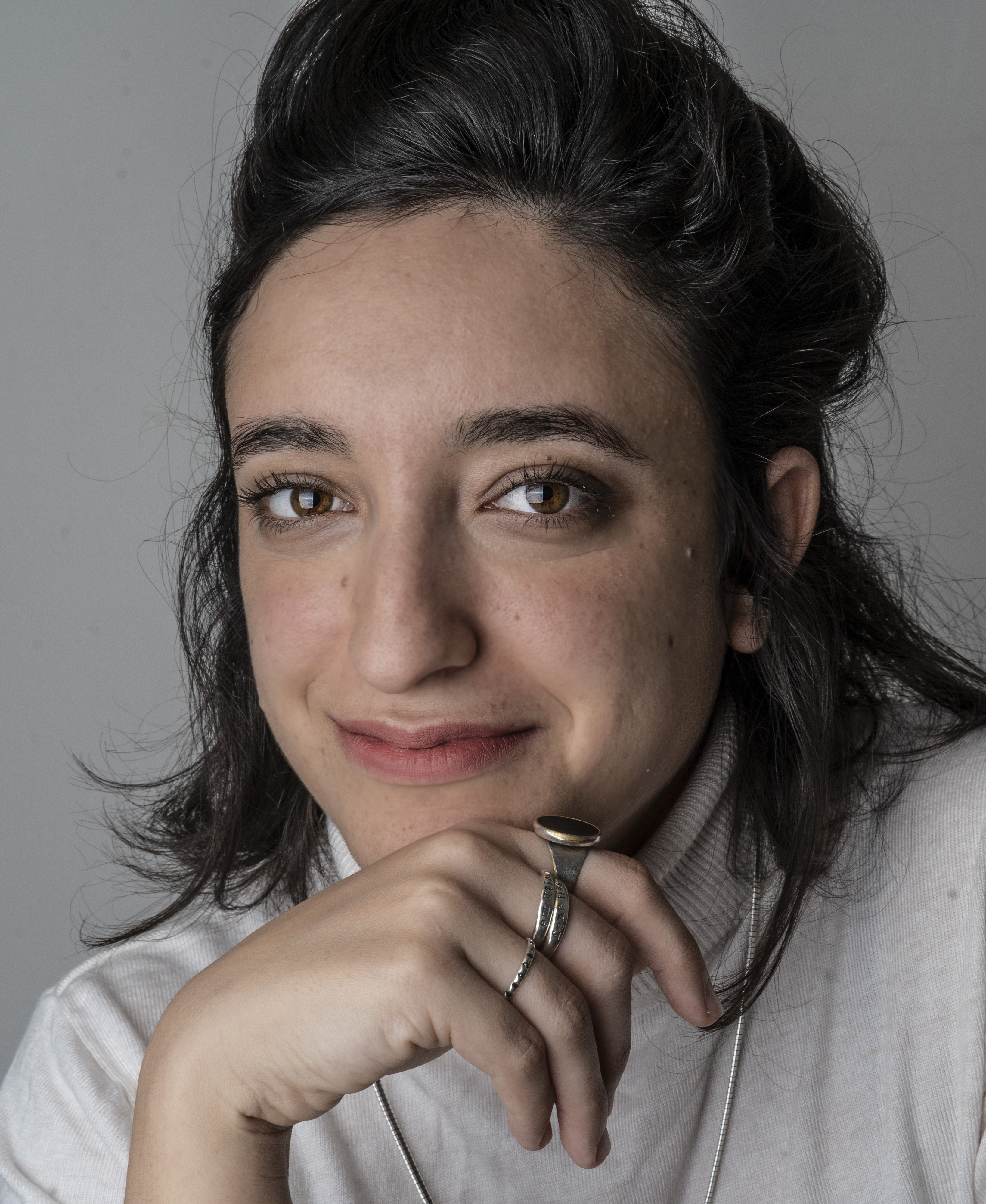
Updated: 5 days ago
In recent years, LGBTQ representation in culture has been growing, but the female voice is still lagging behind. Why is there still so little lesbian representation on stage? Yuval Corne ("Collective Rage," "A Beautiful View," "Five Lesbians Eating A Quiche"), director and co-founder of Hameshulash (The Triangle) Theater, on the lack of LGBT female content, women's complex relationships with lesbian culture and spaces, and what needs to happen for this to change.

Let's start with the most basic thing: is there enough female LGBTQ work today?
Absolutely not. First of all, there is simply very little material. In the past, we hardly saw any theatrical content about the gay community, and today there is already a much greater LGBTQ presence in culture, but it is still mostly male. It is still quite rare to go to the theater and see a play centered around female LGBT characters. If I want to go see lesbian culture now, my options are very, very limited. Television and cinema is a little more advanced, and there too I feel that we are slowly starting to see more representations.
I think it has to do with the fact that there simply aren't enough LGBTQ women creators in theater who are at the forefront. There are a lot of men from the community who create and work in theater, and naturally they also bring their stories and perspectives to the stage. We can't expect anyone else to rush to represent the LGBTQ female voice for us. In order for these stories to be there, we need to be more at the forefront ourselves: writing, directing, initiating, and taking a place.

So why isn't this happening? Why are there fewer women writing and bringing their LGBT experience to the stage?
I think there are many reasons for this. First of all, even prior to the LGBT context, there is something very deeply rooted in the way women grow up in a society that still has a lot of patriarchal structures. It is still harder for women to put themselves forward, to be ambitious, to say "I have something important to say and I want you to listen to me" without feeling like there is a critical eye on them. In my opinion, there is a kind of cycle of insecurity and worthlessness that is instilled in us from a young age, and causes many women to take a step back even when they are talented and have something to say.
And in the LGBT context, there's another layer there. I think that many women can, to some extent, choose not to define themselves. Their identity or orientation is not always visible to the outside world, and therefore there is the possibility of simply assimilating. For certain gay men, this identity is perceived from the outside as more prominent, and therefore sometimes they don't even have the privilege of choosing whether to deal with it or not. For women, you can often say: Why do I need this label? Why put it up front if I don't have to? And there is a fear that taking ownership of this identity will put you in some kind of box.
In my opinion, this also has to do with the fact that there are so few LGBT women who are opinion leaders and public figures who speak about this identity proudly and clearly. In recent years, this is starting to change, and more well-known women are coming out, but even then, not all of them necessarily want to carry this flag. I hope that the more women who do this, the more women will feel they have permission to do the same.

In your opinion, is this different from what happens with gay men? Because it seems that they have actually succeeded in creating a very distinct culture for themselves.
I feel that gay men have managed to create a very distinct culture and community for themselves. We find it is often enough to say "There is a show for gays here," or an event that speaks directly to this community, and a community is mobilized. People gather enthusiastically, share, support. There is less apologeticness for the mere existence of a space that is intended specifically for them.
With women, I still encounter much more shame, cynicism, and a critical eye. There's something funny about lesbian women coming to a lesbian space and saying: "Yikes, where did all these lesbians come from?" As if even when we're already in a space that's ours, something in us is still a little scared of the spotlight. As if we've gotten used to being underground.

And in my opinion, it all comes back to the ability to take up space. To say: We too deserve a space that is ours. We too deserve this space to be in the coolest places, and we too deserve a quality, well crafted, and cool culture that speaks to us. And part of that is also learning to uplift one another, to reach out and support those working to create something like this, and not just stay in the critical, cynical, or fearful place. Because without an audience that supports this culture, it is much more difficult for this culture to continue to be created.
Do you recognize this in yourself too?
Absolutely, I recognize this first and foremost in myself. In fact, for years I pretty much avoided lesbian circles and spaces, until we established Hameshulash Theater. There was something about it that even deterred me. Perhaps it was precisely this fear of being labeled, of being identified primarily through my lesbianism.
And it was precisely through working on founding Hameshulash that I went through a process myself. I learned to put lesbians at the forefront, to reach out, to advocate, to carry the flag, and most importantly to want to create quality LGBT content and to transform lesbian spaces into cool, quality, desirable spaces, both in our own eyes and in the eyes of outsiders. Just as gay parties, for example, have long been perceived as part of a culture that is cool and desirable, and not as some space that needs to be apologized for.

Sometimes I'm asked why it's even important to put this element of our identity at the forefront. Why not just assimilate? And I think my answer today is that there's a whole part of life that we simply don't experience if we do that. My emotional experience when I see a lesbian work of art is different. The way I can identify with it is different. My connection when I'm in a space of women who share certain experiences with me is different. Obviously, I can also be moved and identify with a straight, male work or any other human work, but if I never have the opportunity to see myself and my world reflected on stage, I lose an entire layer of human experience. And in my opinion, it's a shame to give it up just to not be "labeled."
So if these creations don't come organically, what needs to be done to change that?
I think this is exactly our responsibility as an LGBT theater. We can't just wait for these works to come to us and then say, "It's a shame there aren't enough." Our responsibility is to constantly make sure that this content can exist: to seek out female creators, invite them in, develop ideas with them, work with actresses, and create a space where women feel that their stories are welcome and that they have a place on stage.
I also believe a very significant part of creating this space is knowing how to contain the concerns, the fears, and the difficulty in taking up space. If we understand that these are exactly the barriers we talked about earlier, we cannot be frightened by them when they appear. We need to be patient with a creator who is not yet confident in herself, who is afraid to put her identity front and center, who may need to be invited in more than once. We aim not to be moved by this hesitation and not to interpret it as unwillingness or inability, but to encourage, provide confidence, and say: We want to hear your voice, and there is a place for you here.
Sometimes it's harder. Sometimes you have to invest more time, more work, and more resources to get to these works and develop them. But in my opinion, that's part of our job, because in the end it's a self-feeding cycle: the more good, high-quality, and LGBT centered works of theater there are, the more women will see them and feel like they too have a place within this culture. Some of them will come as an audience, want to see more, and support this work, and some of them might say: Wait, I have a story too. I also want to write, direct, or create.
And so, slowly, something was created that wasn't there before. For me, the goal is that at some point we won't have to try so hard to find lesbian centered work, because there will be enough women who feel that they are allowed to simply create it.


Comments